Shattaf Sourcing2026-10-028 min read
Portable Shattaf Factory Sourcing: Travel Bidet Formats, Specs, and the Questions That Settle Quality
Part of the series “Shattaf Sourcing”
Part of the series “Shattaf Sourcing”
Category knowledge for shattaf buyers
Series related to this article

'Muslim shower' is up roughly 80% over the trailing months in our search data — steadier than the portable wave, and concentrated in Pakistan, Bangladesh and Malaysia. What the name means as a product specification, how these markets actually order (boxed angle-valve sets, chrome cores, portable retail bands), and how one sprayer line serves this block alongside the Gulf.

The PO-to-arrival workflow for first-time importers of shattafs, hoses, and shower fittings: how weak-brand OEM factories quote, what MOQ tiering really means, the sample-approval sequence, which documents travel with a shipment, and how compliance-ready sourcing handles CE, CB and SASO without either side pretending the factory holds the certificate.
'Shattaf sprayer' is up 80% year over year, 'bidet sprayer' up 110%, and 'shattaf steel' up 40% — while generic 'shattaf spray' is flat to declining. What buyers mean when they type 'steel', the material ladder from ABS bodies to full-metal construction, and the spec points that decide whether a sprayer survives project use.
Every hot product category passes through the same linguistic stage: buyers stop asking "what is this" and start asking "who makes it". The bidet spray cluster entered that stage in 2026. English-market "travel bidet" queries are up roughly 250% year over year, Arabic-market "شطاف سفر" (travel shattaf) sits at a substantial index and still climbing, and supply-side phrasings — "portable travel shattaf factory" among them — now appear as commercial queries in their own right. When a distributor researches factories rather than products, the question has changed from "should I stock this" to "how do I buy this well".
This guide is the factory-side answer. The travel-format demand analysis covers the market data and the channel logic — whether and where the segment fits your program. This article covers what to do once the answer is yes: the formats on the market, the components that decide quality, the spec sheet a competent factory should answer without hesitation, and how a portable retail band runs alongside the fixed handheld line that fills project orders.
"Portable shattaf" is not one product. In current industry supply, three formats cover essentially the whole market, and they differ enough that the format decision comes before any brand or price-band decision:
| Format | How it works | Where it sells best | What to verify at the factory |
|---|---|---|---|
| Squeeze-bottle reservoir | Flexible bottle; hand pressure drives the spray | The volume band: lowest unit cost, no battery, impulse pricing for pharmacies and travel-goods shelves | Reservoir material and wall thickness, cap seal integrity, nozzle return behavior |
| Battery-pump unit | USB-rechargeable micro pump pressurizes the reservoir | The premium retail band: consistent spray strength, giftable, reviews well online | Waterproofing of the pump compartment, battery cycle life, charging-port sealing |
| Manual pressure pump | Hand pump builds pressure in a rigid reservoir before spraying | A mid band: stronger spray without batteries; popular for hajj and umrah travel retail | Pump mechanism durability, pressure relief behavior, reservoir thread sealing |
Capacities across the format range typically run from roughly 150 to 300 milliliters — enough for the hygiene use case at a size that still fits carry-on rules. Treat every number in this paragraph as industry-typical, not a specification: format, capacity, and materials are exactly the items your RFQ should pin per model.
One boundary worth drawing early, because it saves a category error: none of these formats competes with the fixed handheld shattaf. The fixed unit (sprayer + braided hose + angle valve or mixer) is installation hardware, specified in fit-outs and ordered in case quantities — the set logic behind that line is a different discipline from travel-product sourcing. The portable is a personal-carry consumer product that complements the installed base. The practical consequence for a distributor: the two formats belong in one container plan, not in one SKU family.
Bodies and packaging sell a portable unit. These parts decide whether it survives its first month of real use:
The pattern is deliberate: it mirrors what decides quality on fixed handhelds — working parts, not visible surfaces. A supplier conversation that covers these points is a sourcing conversation; one that covers only finish and box artwork is a merchandising conversation wearing the wrong hat.
Before quantities, before price, request this per model — a competent portable shattaf factory answers it as routine:
The sample sequence that follows is the industry's standard protection: plain samples approved against the spec sheet first, printed artwork second, production referencing the approved sample. On this line, as on our fixed line, samples are free and the courier is the only cost — the sequencing discipline is what protects the order, not the sample fee.
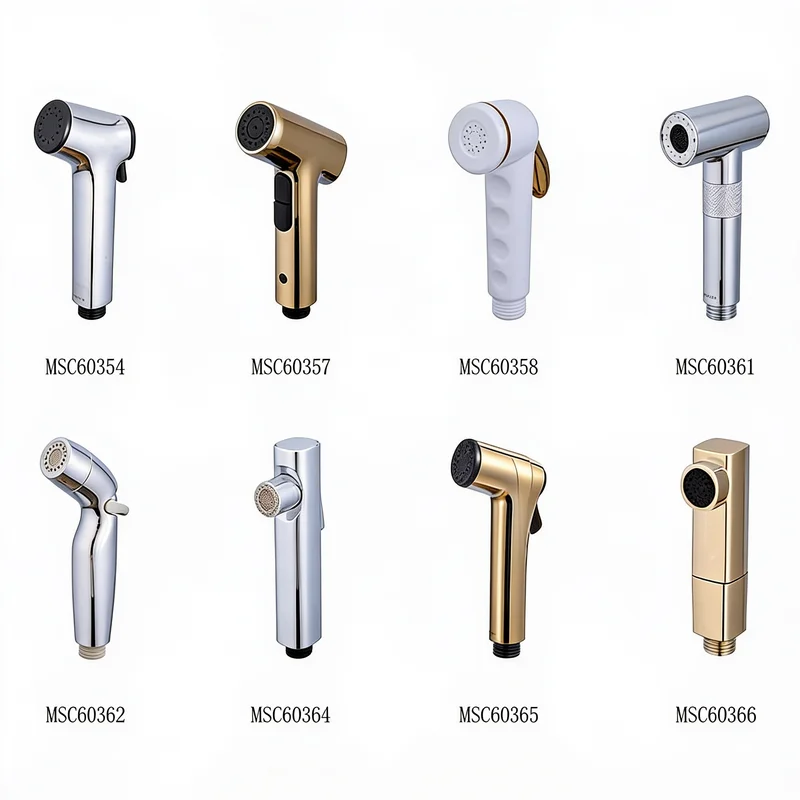
Our position, stated plainly: PlumbFuse's catalogue covers the fixed handheld families — MSC603xx, MSC103xxM, and MSC203xx with finish suffixes — the project-grade, specification-driven side of the category. We do not pretend otherwise to catch the travel trend. What we do is run the structure around it: buyers who test a portable retail band keep the fixed line with one accountable OEM partner, because trigger quality, seals, and private-label packaging are the shared disciplines — and the portable band can ride the same mixed container, the same document set, and the same pre-Ramadan calendar the fixed program already runs on.
That calendar matters as much for the retail band as for project hardware. Gulf wholesale demand concentrates in the November–January renovation window ahead of a mid-February Ramadan; a portable test band that lands with it sells into the same seasonal energy, and one that lands after it waits a year. The full PO-to-arrival workflow — MOQ tiering, sample sequence, shipment documents, classification — is laid out in the importing workflow guide, and it applies to the portable band unchanged.
Certification on portable units follows the same rule as on fixed fittings: the certificate holder is the importer or the brand, not the factory. Compliance-ready sourcing means the factory supplies what your certification file needs — complete specifications, material declarations for wetted components, free samples for the testing sequence — and coordinates third-party CoC issuance per shipment where your destination requires one. Your side completes the CE, CB, SASO, or market-specific certification with that file. A factory claiming to already hold your market's certificate for your brand is worth a second look, whatever the format on the box.
Draw the program in two layers: the fixed handheld line that anchors project and wholesale demand, and a capped portable band that gives your retail customers something new this season. Send both layers in one conversation — destination markets, target price bands, planned quantities — and let the quotation pin the MOQ split, sample plan, and document set across both. Start with the fixed-line shattaf catalogue, or send your program outline through the inquiry form or WhatsApp +86 188 4083 8325, and we will come back with a container structure that leaves measured room for the travel test.